
Last updated November 14, 2026
 Sweep & inspection
 Caps & crowns
 Flue relining
 Masonry repair
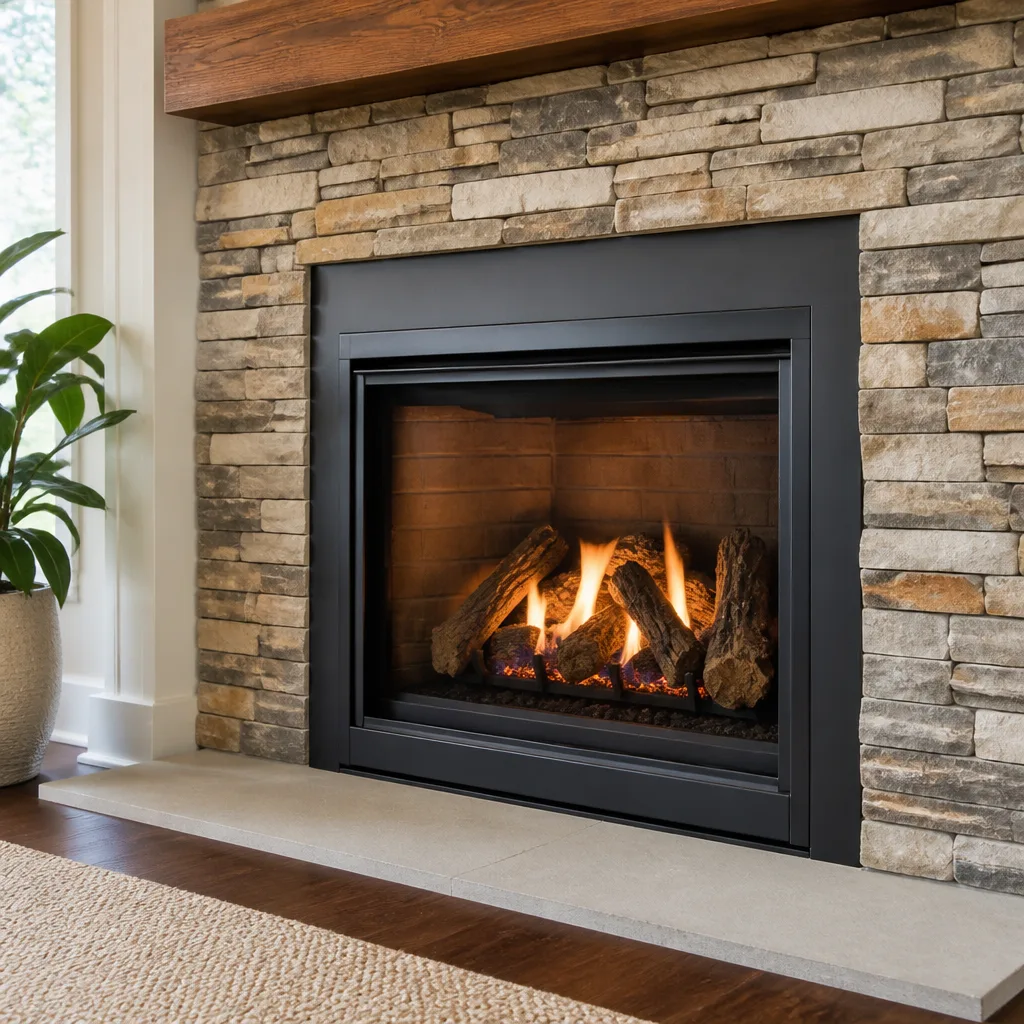 Gas fireplace service
Level 1 sweep and inspection to the NFPA 211 annual standard - flue, crown, cap, and flashing checked and photographed
Chimney sweep logs do not sweep chimneys. They loosen some creosote - which then falls where a brush and vacuum still have to collect it.
Chimney Sweep Maintenance Schedule: What to Do and When
Most homeowners treat a chimney sweep as a once-a-year box to check, usually in late fall, and assume that’s the whole maintenance plan. In Spring Hill, that thinking leaves a lot of the system unwatched. Wood-burning fireplaces here see maybe ninety days of real use each year, but the chimney sits through twelve months of humidity, summer thunderstorms, and warm-season neglect. The damage that costs money tends to build during the off-season, not during the fires themselves. This guide lays out a month-by-month framework for keeping the whole venting system sound, from the October pre-season inspection to the March sweep that most people skip. It’s built around how homes in Spring Hill actually live, not a generic checklist copied from a colder climate.
Quick Answer
A working chimney schedule is more than one annual sweep. Sweep after the last fire of the season, inspect the crown and cap before the first fire of the next one, and check draft and creosote buildup once mid-season. In Spring Hill’s humid climate, the post-season sweep in early spring matters most because warm, wet months are when moisture and nesting problems set in. Gas fireplaces follow a lighter schedule focused on venting rather than creosote. Our technicians have up to 13 years of experience reading those seasonal signals, and a professional camera inspection turns guesswork into a visible record of what’s happening inside the flue.
Styles & brands we work with
- Sweep & inspection
- Caps & crowns
- Flue relining
- Masonry repair
- Gas fireplace service
Table of Contents
- Why a Single Annual Sweep Falls Short in Spring Hill
- The October Pre-Season Checklist: Before the First Fire
- The January Mid-Season Check at Peak Use
- The March Post-Season Sweep and Why It Matters More
- What You Can Check Yourself vs. What Needs a Camera or Ladder
- Gas Fireplace Vents vs. Wood-Burning Schedules
- The Dryer Vent Belongs on the Same Calendar
- How Often Should a Chimney Be Swept?
Why a Single Annual Sweep Falls Short in Spring Hill
Winter here is gentle. That sounds like a reason to relax, but a mild winter means the chimney never gets the deep cold that slows biological growth and keeps moisture from lingering. The same humidity that makes Spring Hill comfortable in January keeps working on masonry, mortar, and metal throughout the warmer months. Creosote that was soft during burn season can harden over summer. Leaves, twigs, and the occasional determined bird move into an open flue. Small cracks in a mortar crown widen when water sits in them and expands under the sun.
That’s why an annual sweep is a floor, not a ceiling. A sweep clears what already accumulated. A schedule catches what’s forming before it becomes a repair. The difference shows up in three places:
- Crown condition. The concrete cap at the top of the chimney is the first line of defense against rain. Once it cracks, water enters the chimney structure, not just the flue.
- Cap and screening. Summer storms and wind push debris onto a cap screen. A clogged screen restricts draft and invites nesting.
- Liner integrity. A crack in a clay tile liner or a pinhole in a stainless system is invisible from the hearth. Only a camera sees it before it becomes a carbon monoxide path into the home.
If you’re in a neighborhood like Timber Pines or Sterling Hill, or really anywhere in Spring Hill, your fireplace was likely built for occasional cool-evening use, not heavy northern-style burning. That use pattern is exactly the one that hides problems. The chimney doesn’t complain. It just accumulates.
The October Pre-Season Checklist: Before the First Fire
October is when a chimney in Spring Hill wakes up after five or six months of sitting idle. What you want before the first fire is a clear flue and a sound exterior. This is the month to look at the top of the system, because the rainy season just finished with it. If you call a chimney sweep in October, ask for a camera inspection as part of the visit, not as a separate trip.
- Inspect the crown. A professional checks for cracks, spalling, and gaps where the crown meets the flue. Minor cracks get sealed; larger failures get rebuilt.
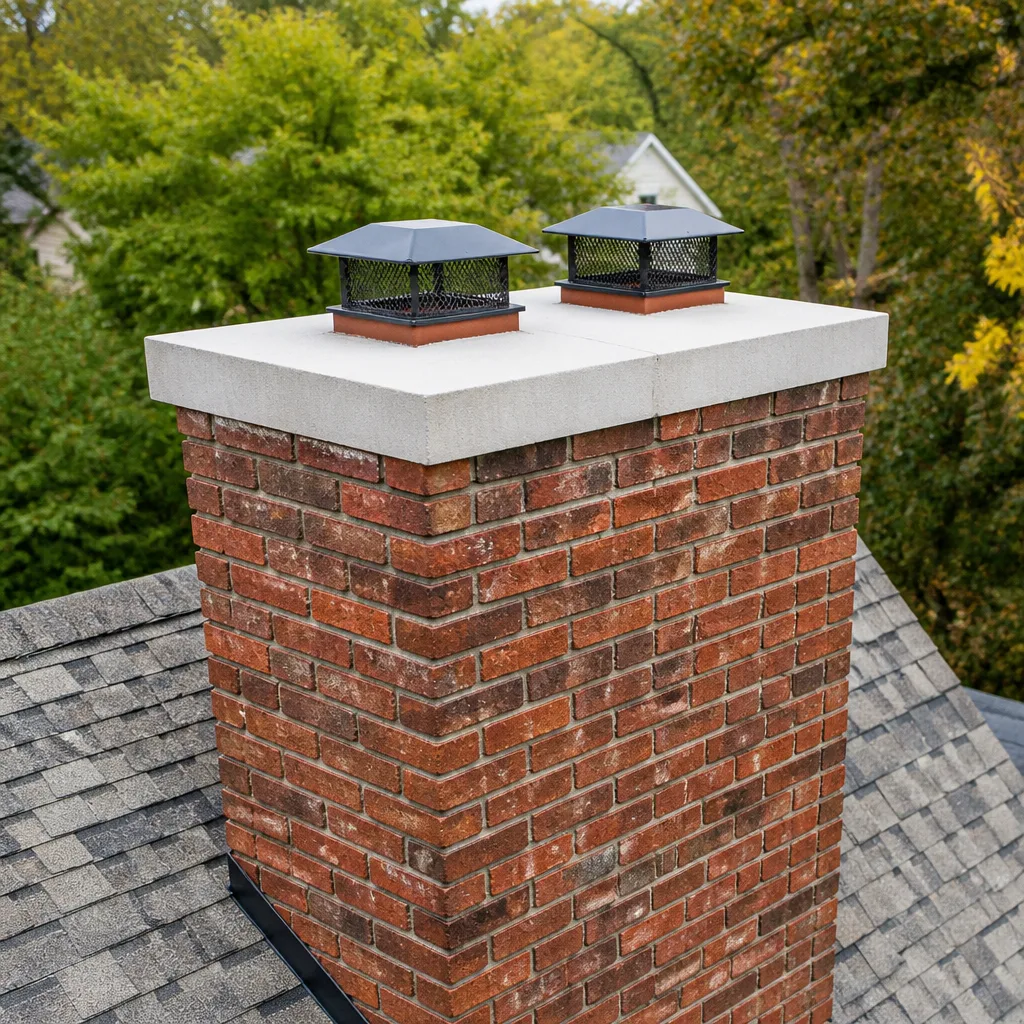
- Check cap screening. The mesh should be intact and clear. Torn screening lets birds and squirrels in; clogged screening starves the draft.
- Sweep the flue. Any creosote load from last season gets removed before the first fire. Glazed, third-stage creosote is a fire risk and takes more than a brush to address.
- Camera the liner. A full-length camera view shows cracks, gaps at joints, and slipped tiles that no amount of looking up from the firebox can reveal.
- Test the damper. It should open fully, close flush, and seal. A damper that sticks open wastes heat and lets humid air into the flue year-round.
- Confirm draft. A quick smoke or draft test tells you the flue is pulling correctly before you build a fire.
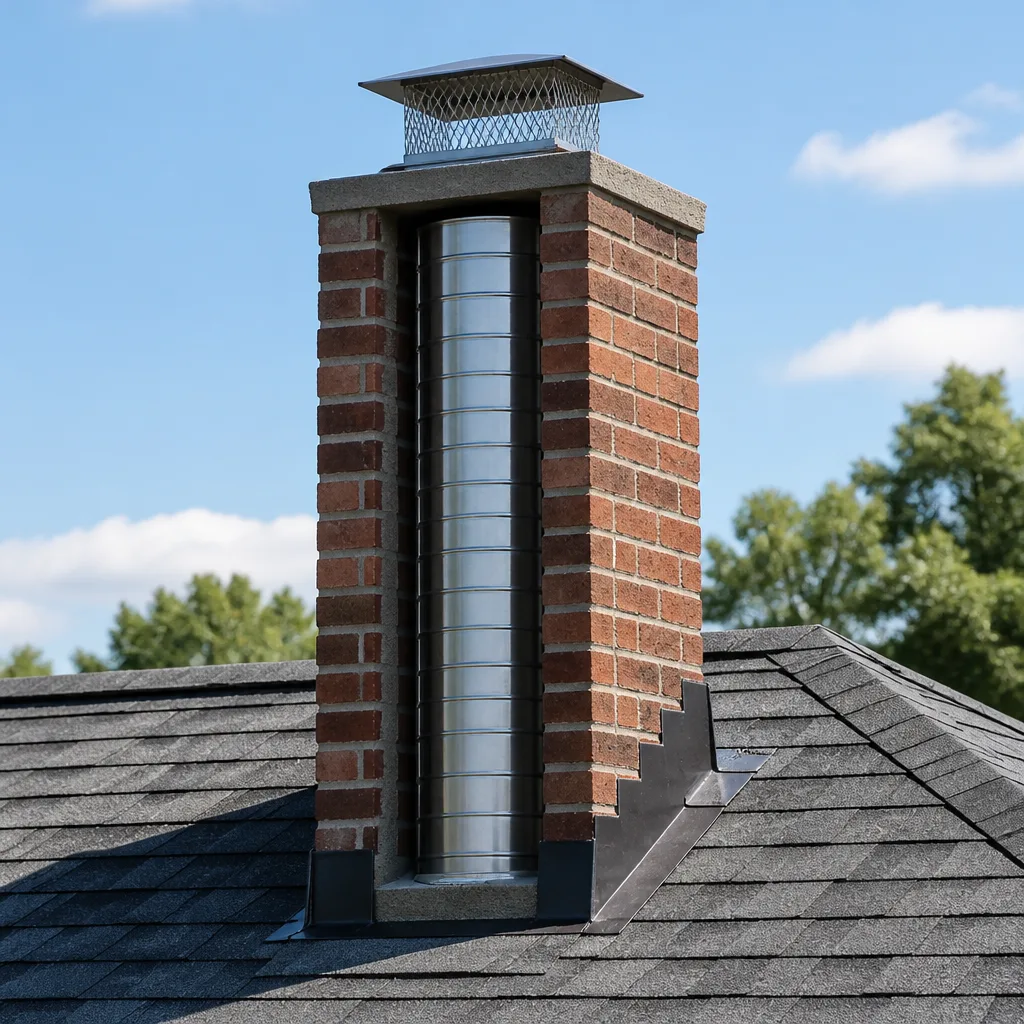
Every one of those steps produces a finding. When a sweep turns up a deteriorated flue, we can resurface it with HeatShield, a compound designed specifically for restoring liners rather than patching with generic material. When a flexible liner needs replacement, we specify DuraFlex systems because they’re engineered for the application. The point of doing this in October is that the diagnostic and the fix can happen in the same visit, not two months apart.
The January Mid-Season Check at Peak Use
By January, most fireplaces in Spring Hill have seen a month or more of regular burning. This is peak use, and it’s the one time of year when a mid-course correction is worth scheduling. A mid-season check is lighter than a full sweep. It’s a technician looking at how the system is behaving under load.
- Draft performance. Smoke that rolls into the room, a fire that’s hard to start, or a flue that feels weak all point to a partial blockage or an oversized flue. Draft problems get worse as creosote accumulates.
- Creosote stage. Creosote progresses from soft and flaky to sticky to glazed and hard. A mid-season look tells you whether your burning habits are producing more than the flue can clear on its own.
- Damper seating. A damper that no longer closes flush leaks warm air up the chimney in summer and lets cold air down in winter. It’s a small part with an outsized effect.
- Firebox and mortar joints. Loose mortar at the firebox is a structural warning, and it’s cheap to address early.
- Cap condition after storm season. Even in mid-winter, a strong front can shift a cap or lift a screen. A quick look confirms nothing moved.
This is also the moment to talk about wood. Seasoned hardwood burns cleaner than green or soft wood, and burning wet wood is the fastest way to build creosote fast. If your flue is loading up in January, the wood you’re burning is often the reason. A technician can tell from the creosote stage what your burning habits are producing.
The March Post-Season Sweep and Why It Matters More
Here’s the part most schedules get wrong. The sweep after the last fire of the season is more important than the one before the first fire. That’s counterintuitive until you think about what the off-season does. Once the fire goes out in March, the chimney sits through eight or nine months of Spring Hill heat and humidity. Whatever is in the flue stays there and gets worse. Creosote hardens. Moisture finds the cracks. Animals nest.
A post-season sweep sets the system up to sit through the damp months in a safe condition. It does four specific things:
- Removes the creosote load. The last fires of the season leave the most residue. Clearing it in March means nothing acidic sits against the liner all summer.
- Closes the top of the system. A proper cap and intact screening means nesting animals can’t claim the flue. This is the single most common off-season problem we see.
- Protects against moisture. Once the flue is clean and the crown is sound, rain has nowhere harmful to go. Water is the slow cause of most masonry deterioration in this climate.
- Documents condition for the next owner or insurer. A camera report from March gives you a baseline to compare against next October.
If you’ve been meaning to book a Chimney Sweep Spring Hill visit but haven’t, early spring is the low-pressure window. It’s the same calendar slot many neighborhoods in Spring Hill use, and it beats waiting for the October rush when everyone remembers their chimney at once.
What You Can Check Yourself vs. What Needs a Camera or Ladder
There’s a real line between what a homeowner can safely check and what needs a trained technician. Crossing that line is how people get hurt or miss something serious. Here’s the honest split.
Safe to do yourself, from the ground:
- Look at the crown from the ground with binoculars. Cracks, missing chunks, or a sunken edge are all visible.
- Check the cap and screen visually. Is the mesh intact? Is it clogged with leaves or debris?
- Confirm the damper opens and closes smoothly by hand at the hearth.
- Listen for birds or scratching inside the flue, especially in spring.
- Note any smoke rollback, unusual smells, or soot streaks around the firebox.
Needs a professional:
- Any full-length view of the liner. That requires a chimney camera.
- Removing creosote, especially glazed creosote.
- Any work on the crown, cap, or masonry at height.
- Testing draft under real fire conditions.
- Assessing whether a liner crack is a safety failure or a cosmetic issue.
The last one is the important one. A camera inspection isn’t an upsell. It’s how a technician tells you the difference between a liner that’s fine and one that’s letting combustion gases into the house. If we recommend resurfacing with HeatShield or a DuraFlex reline, we’re doing it because the camera showed a real defect you can see for yourself on the report. And when a chimney is fine and can safely wait another season, we’ll tell you that too. That kind of straight answer is what homeowners tell us they were missing from previous contractors.
Gas Fireplace Vents vs. Wood-Burning Schedules
Most generic maintenance guides collapse gas and wood-burning fireplaces into one recommendation, and that’s a real mistake. They’re different systems with different failure modes, and the schedule should reflect that.
A wood-burning chimney’s main enemy is creosote. It builds from incomplete combustion, and the whole annual sweep calendar is built around removing it. A gas fireplace doesn’t produce creosote. What it does produce is water vapor and mild acidic condensate, and its venting system has its own issues. A vented gas fireplace needs its vent checked for blockage, proper termination, and draft, usually once a year. The vent can be clogged by debris, bird nests, or, in the case of direct-vent systems, degraded seals. A vent-free gas fireplace doesn’t vent at all, but it still needs the burner, logs, and safety shutoffs checked annually.
Here’s what the schedule looks like for each:
- Wood-burning: sweep post-season (March), inspect pre-season (October), mid-season check (January). Camera annually.
- Vented gas: annual vent and termination inspection, plus a burner and log check. Inspect before the first cold snap so a blockage doesn’t surprise you.
- Vent-free gas: annual burner and safety shutoff inspection. No flue to sweep, but the appliance still needs eyes on it.
If you’re not sure what kind of system you have, that’s worth knowing. A technician can identify the vent type and the correct schedule in a single visit, and the difference affects what parts you’ll need when something eventually fails. Components we source through Olympia Chimney and Gelco are selected for the specific system, not as generic replacements.
The Dryer Vent Belongs on the Same Calendar
A chimney maintenance schedule is really a venting schedule, and the dryer vent is part of the same system-thinking. A clogged dryer vent is one of the most common causes of house fires in the country, and most chimney-focused companies don’t touch it. We include dryer vent cleaning as a core service because ignoring it undermines the whole point of maintaining your other vents.
The schedule for a dryer vent is simpler than a chimney but just as easy to forget. Lint accumulates in the duct run, especially where the duct bends or where it exits the house. In a humid climate like Spring Hill’s, that lint can also trap moisture, which makes it a nesting target for pests and a mold risk. Homes with long duct runs or multiple bends accumulate lint faster.
- Clean the lint trap after every load. That’s not maintenance; that’s basic operation.
- Inspect the exterior vent flap seasonally. It should open freely and not be blocked by lint or debris.
- Have the full duct run cleaned periodically, especially if drying times have gotten longer or the exterior flap isn’t opening fully.
Pairing dryer vent cleaning with the annual chimney sweep keeps both vents on one calendar, which is the whole point of a schedule. One reminder, two systems handled, no second contractor to coordinate.
How Often Should a Chimney Be Swept?
Once a year is the general floor for a wood-burning chimney in regular use, and more often if you burn heavily or notice draft problems. But “once a year” doesn’t mean “sometime this year.” It means post-season, so the flue sits clean through the humid months. That’s the specific timing that makes sense in Spring Hill’s climate.
The general guidance most chimney professionals follow is based on accumulation, not the calendar. If you burn a cord of wood or more per season, or you notice smoke rollback, or your wood is green, the flue may need attention more often than once. A camera inspection at the sweep tells you how much buildup there is and whether the cadence should change.
Here’s a working Spring Hill schedule as a single table:
- October: Pre-season inspection. Crown, cap, screen, damper, camera on liner, draft test.
- January: Mid-season check. Draft, creosote stage, damper seating, firebox joints.
- March: Post-season sweep. Remove creosote, confirm cap, verify no nesting, document condition.
- Any month: Dryer vent inspection if drying times lengthen or the exterior flap sticks.
If you’re in a newer Spring Hill community or a home with a gas insert, the cadence shifts to annual vent and appliance inspection rather than a creosote-focused sweep. If you’re not sure which applies, that’s a five-minute conversation and a quick look at the appliance.
Common Mistakes to Avoid
- Only sweeping before the first fire. A pre-season sweep clears last season’s creosote but leaves the summer’s moisture and nesting problems to sit all winter. The post-season sweep is the one that protects the system through the long damp season.
- Treating the crown as someone else’s problem. A cracked crown lets rainwater into the chimney structure, not just the flue. It’s an inexpensive fix early and an expensive one after a summer of water intrusion.
- Skipping the camera because the chimney “looks fine” from the hearth. Liner cracks and joint gaps are invisible from below. Looking up from the firebox tells you almost nothing about the condition of the flue.
- Using a generic cap or vent component off the shelf. Chimney caps and venting parts are sized and engineered for specific systems. We source purpose-built components through Gelco, Famco, and Olympia Chimney because improvised hardware fails in ways that are hard to trace later.
- Burning green or unseasoned wood. Wet wood is the fastest route to heavy creosote. If your flue loads up in a single season, the fuel is usually part of the answer.
- Forgetting the dryer vent entirely. A clogged dryer vent is a leading household fire hazard and gets no attention when the chimney schedule is the only thing on the calendar.
- Assuming a gas fireplace needs no maintenance. It doesn’t need sweeping, but its vent, burner, and safety shutoffs still need an annual look. A blockage in a gas vent isn’t visible and isn’t harmless.
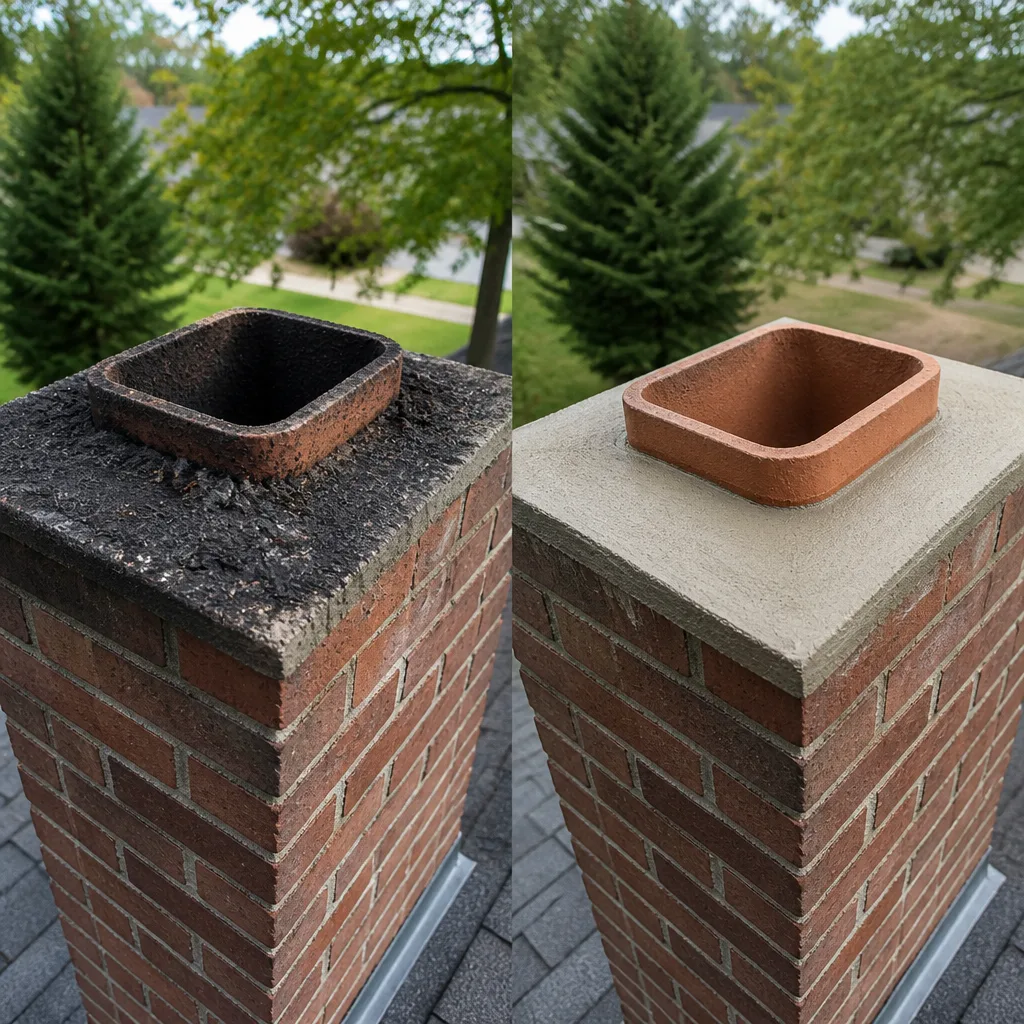
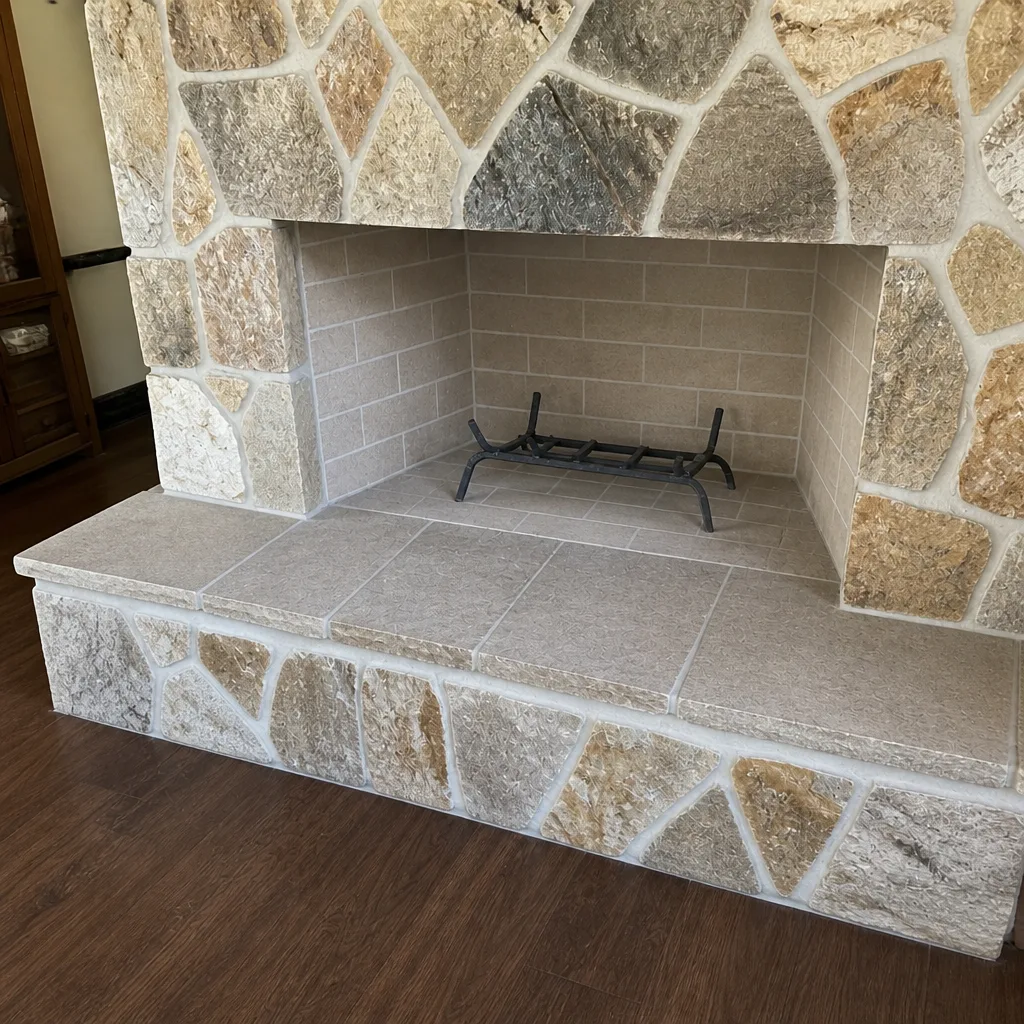
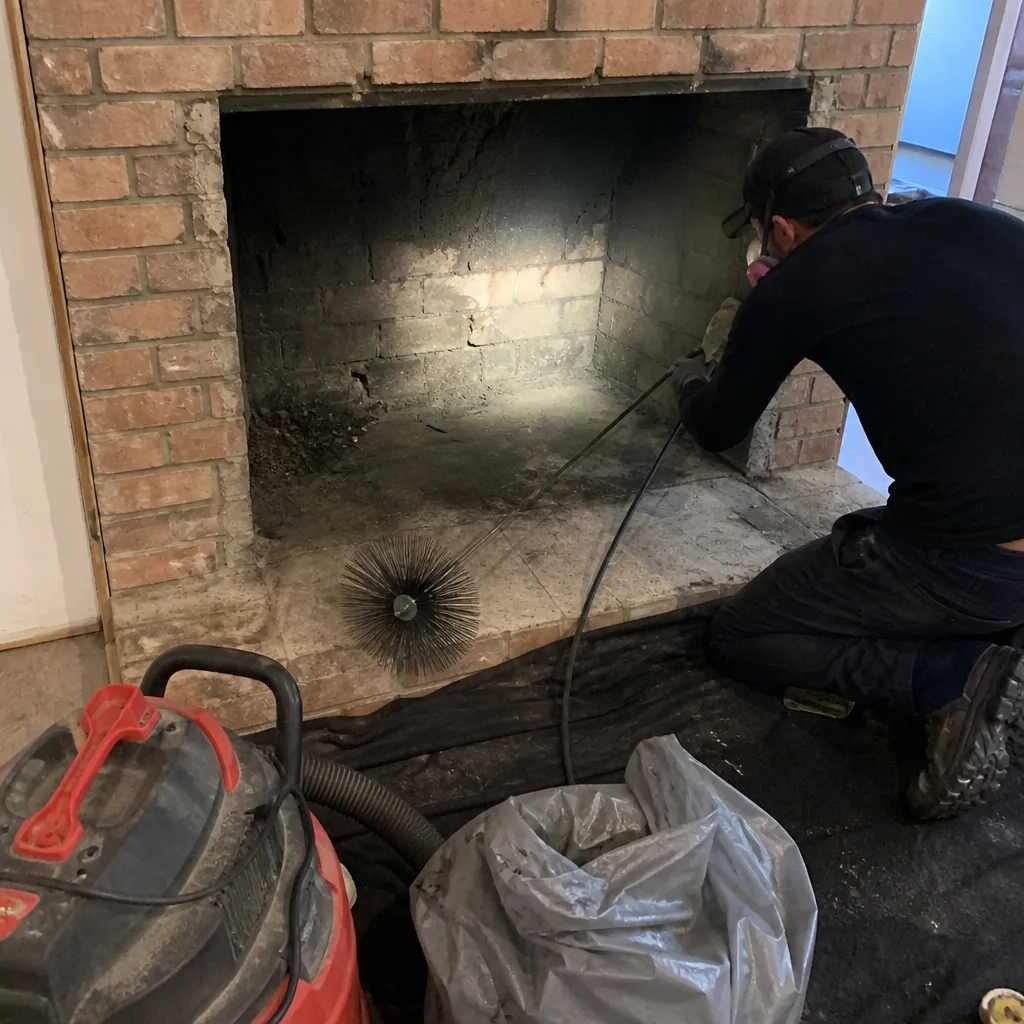
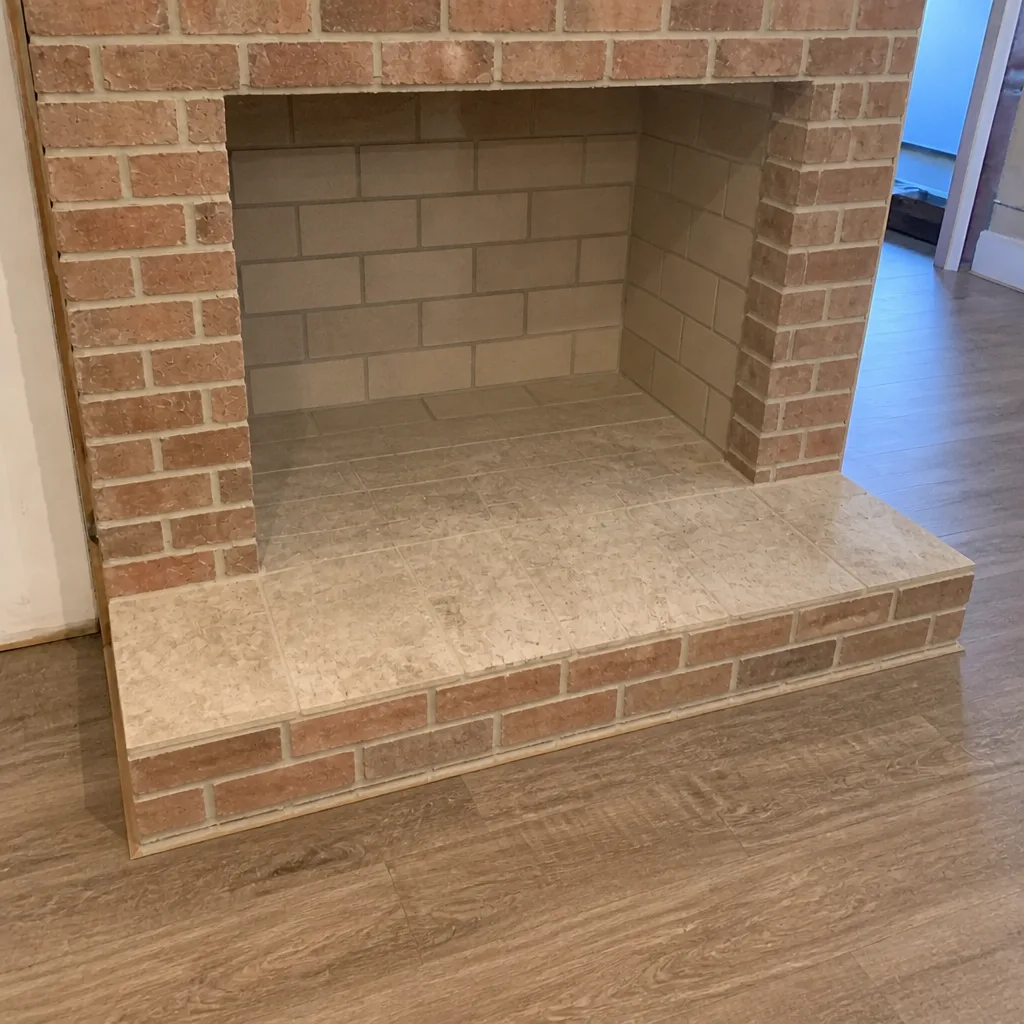
See the difference
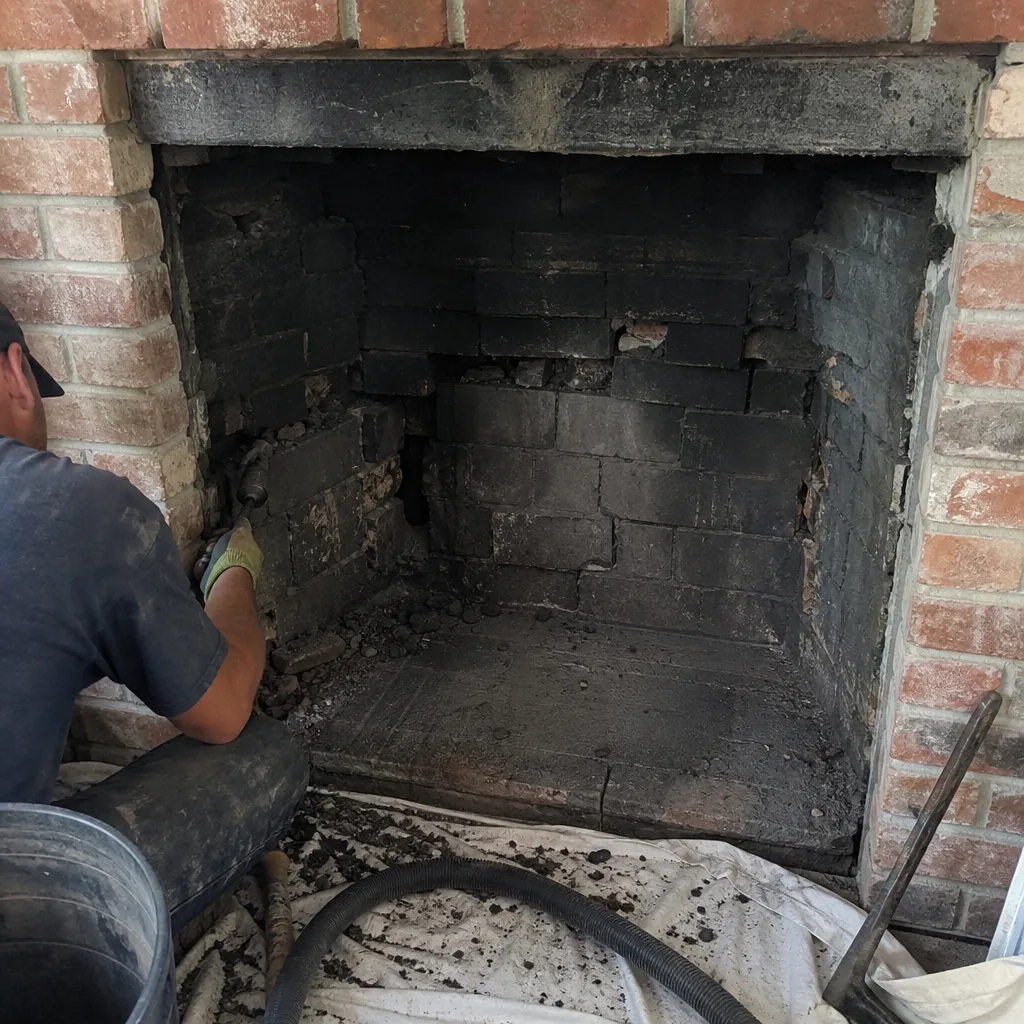 Before
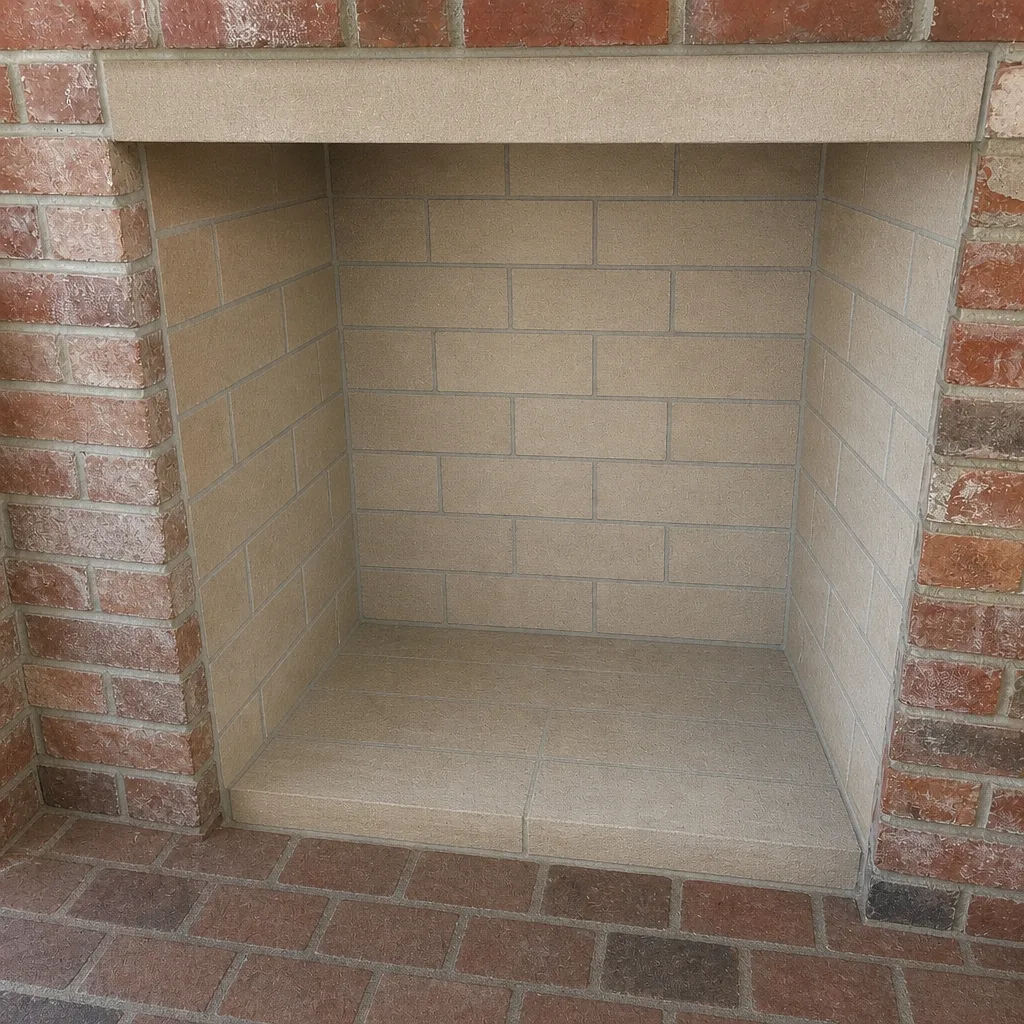 After
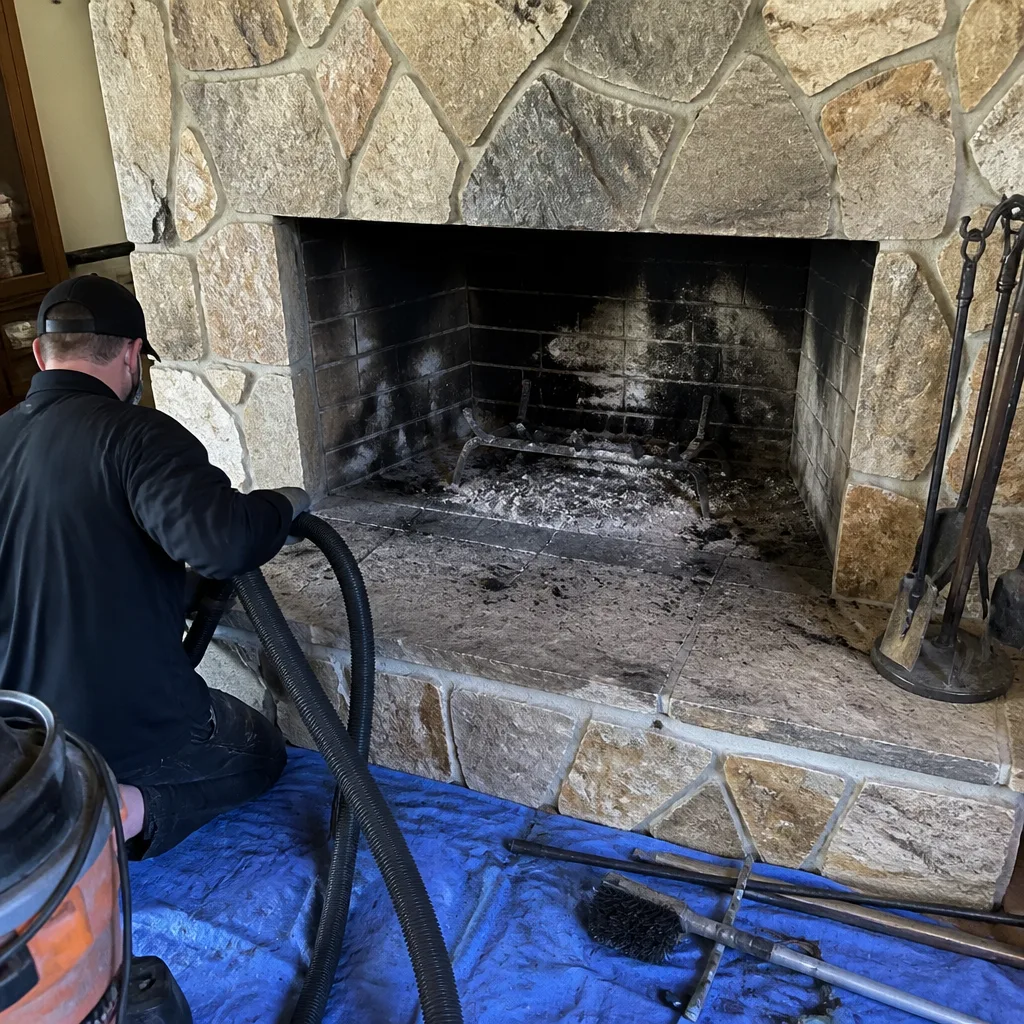 Before
 After
 Before
 After
When to Call a Professional
Some things belong on a schedule and some things should trigger a call right away. Call in a professional if you notice smoke rolling into the room when you build a fire, a smell of creosote or burning in the house, soot streaks around the firebox, visible cracking in the crown from the ground, or any sign that an animal has moved into the flue. Call if it’s been more than a year since the last sweep, or if you’ve never had one on a home you recently bought in Spring Hill. Call if you’re not sure the liner is sound, because a camera inspection is the only reliable way to know.
The other reason to call is trust. Repair recommendations should come with evidence you can see. If a chimney is fine and can safely wait, that should be said plainly. If a liner needs resurfacing with HeatShield or a flexible reline with a DuraFlex system, the camera report should show why. Chimney Sweep Spring Hill offers free estimates in Spring Hill. Call (855) 360-8361. We answer 24/7. Fast dispatch from 7am to 7pm, Sunday through Friday.
Frequently Asked Questions
At least once a year, and ideally right after the last fire of the season in early spring. In Spring Hill’s humid climate, a March sweep removes creosote before the damp season sets in, which protects the liner and discourages nesting. If you burn heavily or notice draft problems, a mid-season check is worth adding. Call (855) 360-8361 for an exact quote. Estimates are free.
Because the chimney sits through eight or nine humid months after the last fire, and whatever is inside the flue gets worse during that time. A post-season sweep clears creosote before summer heat hardens it and closes the top of the system against nesting animals. The pre-season sweep is still useful, but it can’t prevent what happened all summer. Call (855) 360-8361 to book a spring sweep. Estimates are free.
No. A gas fireplace produces no creosote, so it doesn’t need a sweep in the wood-burning sense, but it does need an annual vent inspection plus a burner and safety shutoff check. A clogged gas vent is invisible from the hearth and still a real risk. If you’re not sure which type you have, a technician can identify it in one visit. Call (855) 360-8361 for a free estimate.
You can safely look at the crown and cap from the ground with binoculars, confirm the damper opens and closes smoothly, listen for animals in the flue, and watch for smoke rollback or soot streaks. Anything that needs a camera, a ladder, or creosote removal should go to a technician. Climbing a roof or opening a chase is where the real risk lives. Call (855) 360-8361 if anything looks off. Estimates are free.
Creosote accumulates, but the bigger long-term damage in a mild climate is moisture entering through a failed crown or cap and slowly deteriorating the masonry. Nesting animals and liner cracks also go unnoticed, and a cracked liner is a carbon monoxide path into the home. Skipping isn’t automatically dangerous, but you lose the ability to distinguish a fine chimney from a risky one without a camera. Call (855) 360-8361 for a free estimate and a look at the system.
Pricing is set per job by a written estimate, and there’s no charge to get that estimate. The sweep itself is one step; repair work only follows if the camera inspection shows a real problem, and you get to see that report yourself. If the chimney is fine and can safely wait, you’ll hear that plainly. Call (855) 360-8361 for an exact quote. Estimates are free.
The Bottom Line
A chimney schedule that only has one appointment on it misses the seasonal work that protects a Spring Hill home through the damp months. The three anchors are simple: inspect in October before the first fire, check draft and creosote at peak use in January, sweep in March after the last fire so the system sits clean all summer. Check the crown, cap, and screen yourself from the ground when you can, and leave the camera, ladder, and creosote to a technician. Gas fireplaces need a lighter but different schedule focused on venting. And put the dryer vent on the same calendar. One system, one schedule, six or seven visits over the year, most of them short. That’s the plan that actually prevents the failures a single sweep won’t catch.
Chimney Sweep Spring Hill provides chimney sweeping, chimney repair, and dryer vent cleaning in Spring Hill, and we work with the professional-grade product lines the trade trusts so the fix holds. If you’re ready to put your chimney on a real schedule, call (855) 360-8361 for a free estimate. We answer 24/7. Fast dispatch from 7am to 7pm, Sunday through Friday.
Written by the team at Chimney Sweep Spring Hill.