
Last updated November 14, 2026
 Sweep & inspection
 Caps & crowns
 Flue relining
 Masonry repair
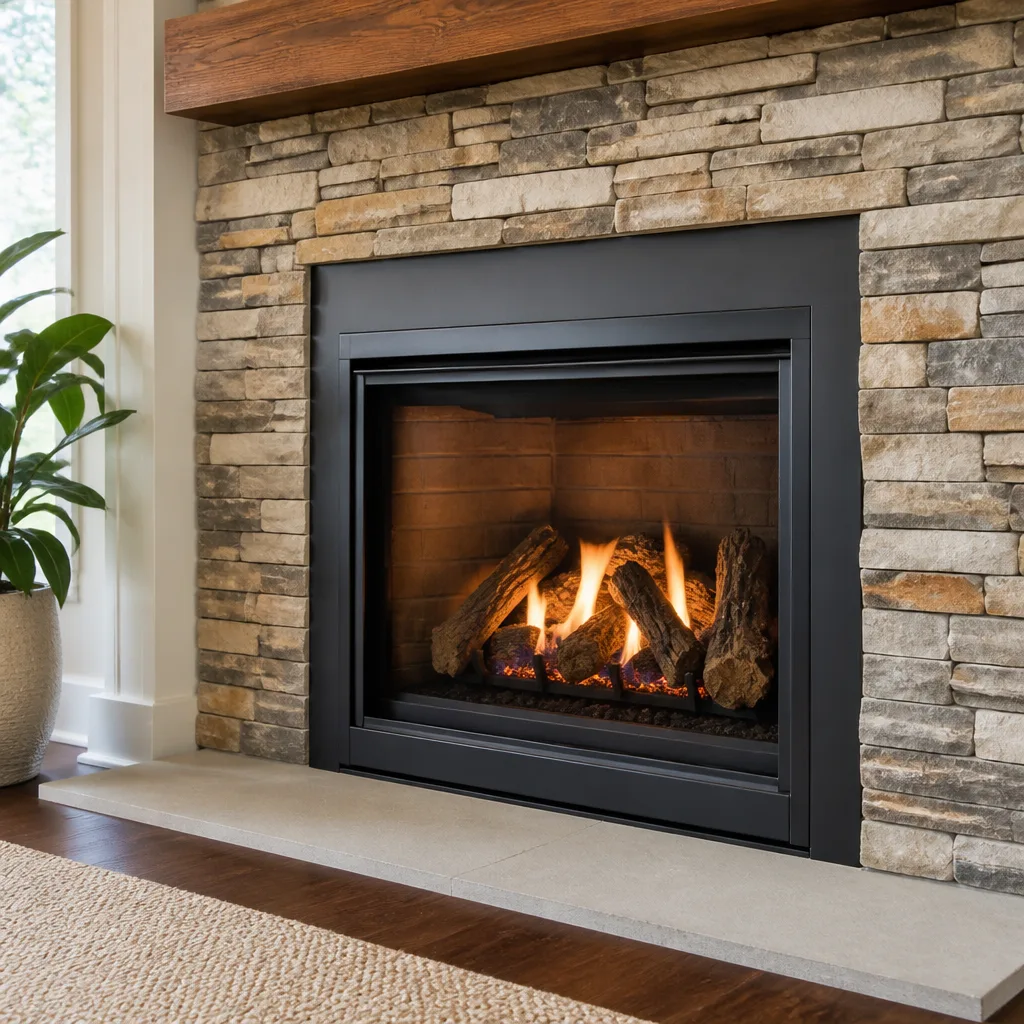 Gas fireplace service
Level 1 sweep and inspection to the NFPA 211 annual standard - flue, crown, cap, and flashing checked and photographed
Chimney sweep logs do not sweep chimneys. They loosen some creosote - which then falls where a brush and vacuum still have to collect it.
DIY vs Professional Chimney Cleaning: The Spring Hill Homeowner’s Decision Guide
A chimney brush kit from a hardware store will remove stage 1 creosote from a straight flue. It won’t tell you that the clay liner tile three sections down is cracked, that the mortar crown has a water infiltration path, or that a previous occupant’s screen is rusted through. Those are the things that burn houses down. In Spring Hill, where fireplaces sit idle through long warm months and get used in short, intense bursts when the first cool front arrives, the gap between “I swept my chimney” and “my chimney is safe” grows a little wider each year. This guide breaks down exactly what DIY cleaning covers, what it misses, and how to decide which route fits your home.
Quick Answer
DIY chimney brushing is worth considering only on a system that has been professionally inspected recently, has a confirmed intact liner, and needs nothing more than surface soot removal. For anything else, professional cleaning wins because the cleaning is the smaller half of the visit. The inspection is the point. A technician with camera equipment sees the liner, the crown, the smoke chamber and the flue draw. A brush does not.
Styles & brands we work with
- Sweep & inspection
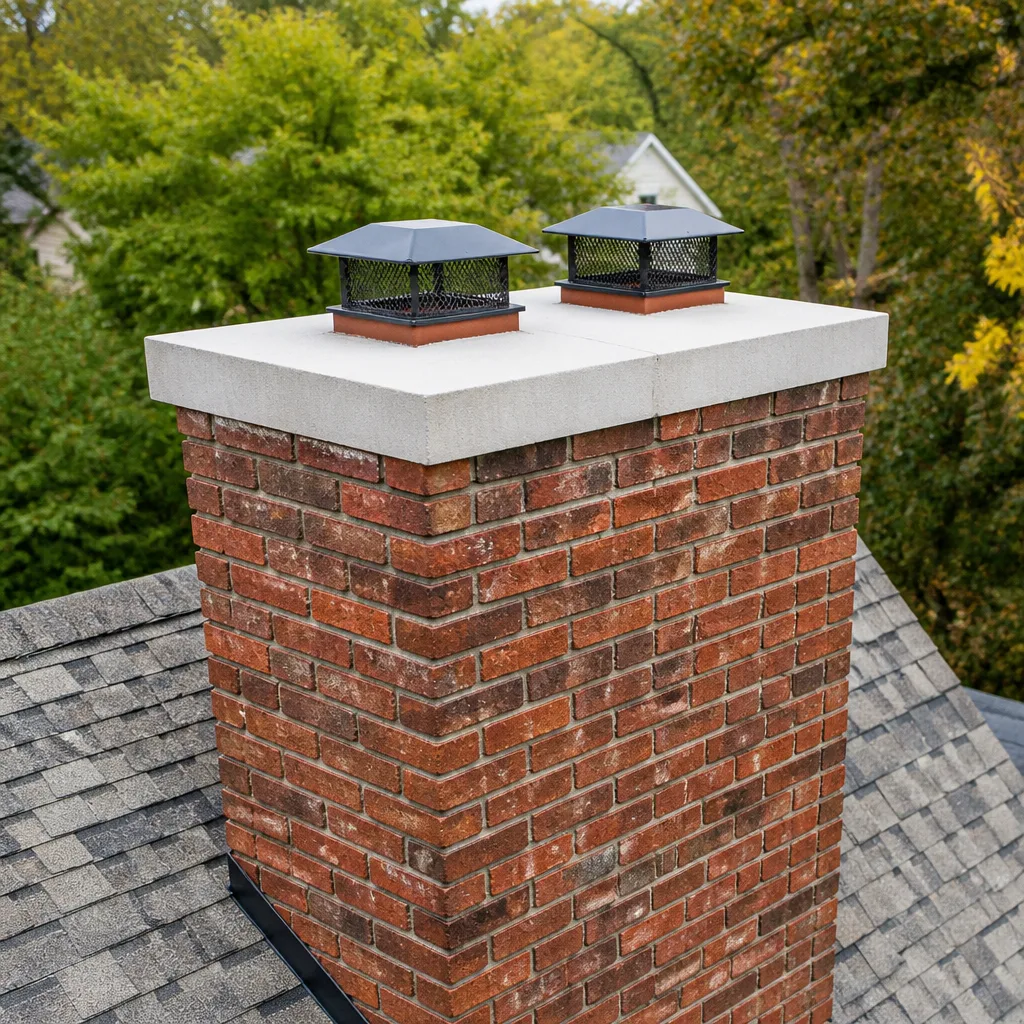
- Caps & crowns
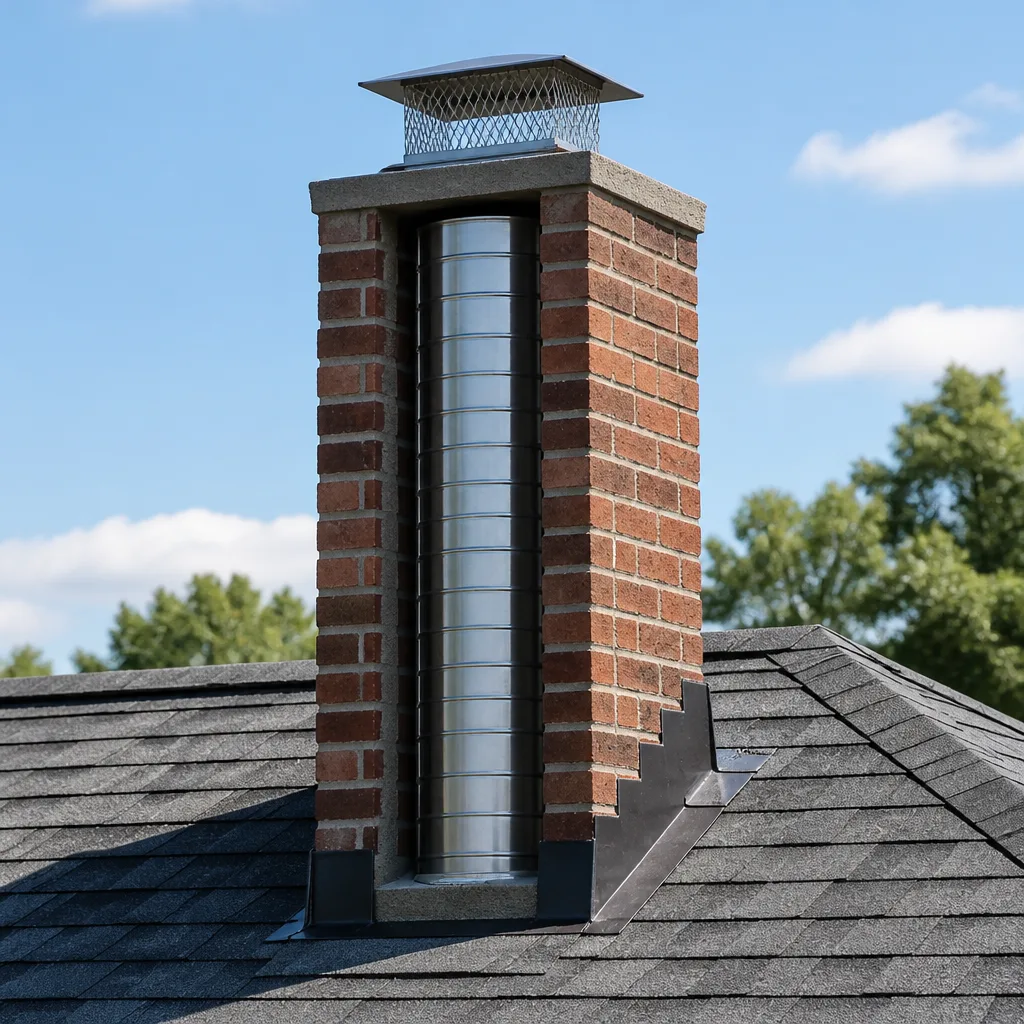
- Flue relining
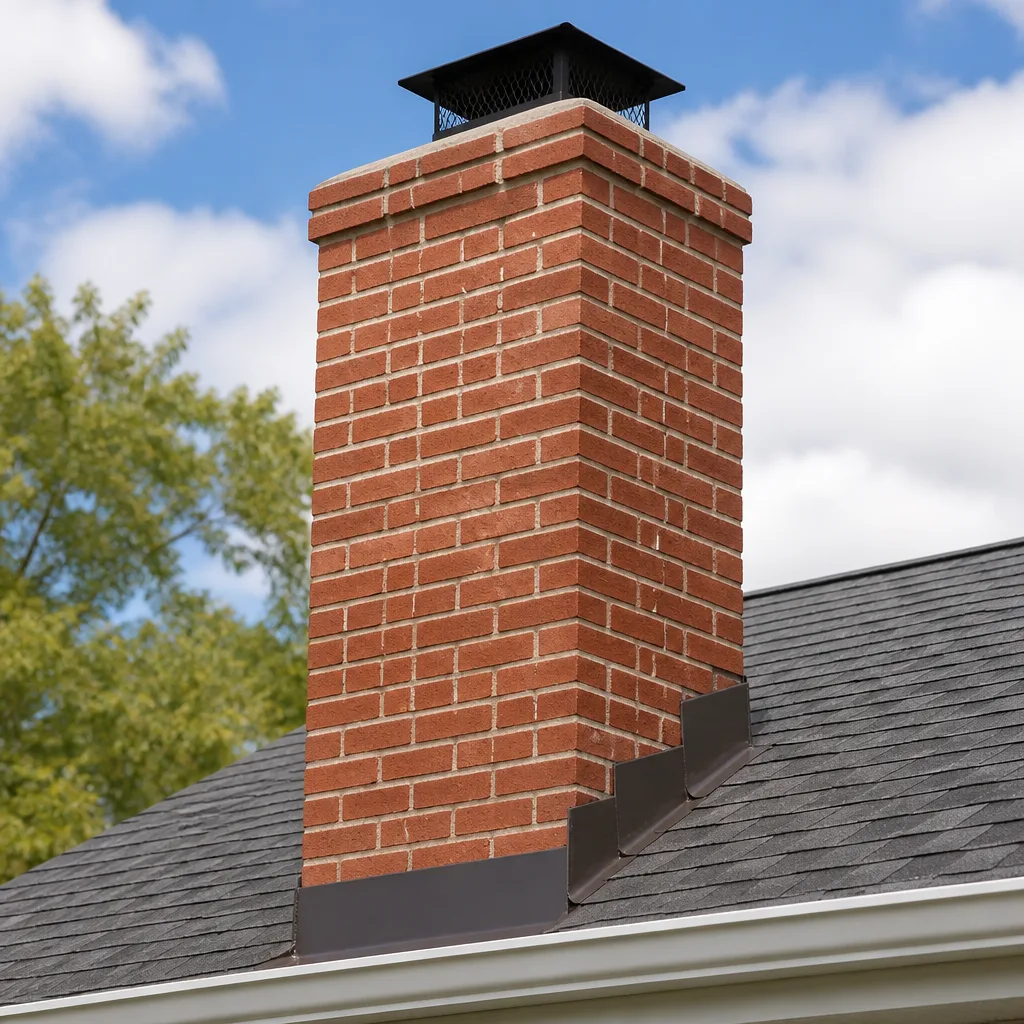
- Masonry repair
- Gas fireplace service
Table of Contents
- What DIY Chimney Cleaning Actually Covers
- What DIY Cleaning Misses Entirely
- The Tools a Legitimate Self-Clean Requires
- Why Florida’s Infrequent-Use Pattern Makes DIY Riskier
- The Inspection Gap: Camera, Crown, and Draw
- The One Scenario Where DIY Brushing Makes Sense
- The Real Cost Comparison in Spring Hill
- Common Mistakes to Avoid
What DIY Chimney Cleaning Actually Covers
A homeowner with the right brush and a solid roof plan can accomplish a defined set of tasks, and it helps to be honest about which ones. A competent DIY cleaning does four things if it’s done properly.
- Removes stage 1 creosote. This is the light, flaky, soot-like deposit that brushes off easily. On a straight flue with a clean liner, a correctly sized brush will clear it.
- Clears the firebox floor. Ash, leftover wood, and debris come out with a shovel and a shop vacuum rated for fine particles.
- Opens a clogged flue cap screen. If the spark arrestor mesh has filled with soot or lint, a brush from below or a hose from above can clear it.
- Wipes down the damper area. Loose soot around the damper frame comes off with a rag and a vacuum.
What that list describes is surface cleaning. It’s real work, and on a well-maintained system it does reduce soot load. But it’s also the part of the job that was never the hard part. In our experience, the hard part is what the brush can’t reach or see.
What a brush physically cannot do
A flue brush is a mechanical scraper on a flexible rod. It scrubs what it touches. It does not evaluate, and it does not photograph. Anything behind a tile, above the smoke shelf, or in the smoke chamber’s sloped corners stays out of view. That’s the line between cleaning and inspection, and it’s the line this entire decision turns on.
What DIY Cleaning Misses Entirely
The tasks a homeowner cannot realistically perform with a brush kit are the ones that determine whether a chimney is safe to use. Each one requires either equipment, training, or both.
- Video inspection of the liner. A camera on a flexible rod travels the full flue and shows cracked tiles, gaps at the joints, and spalling mortar. A brush passes these without a sound.
- Mortar crown evaluation. The crown is the concrete cap on top of the chimney. Hairline cracks and separated edges let water in, and water is the leading destroyer of masonry chimneys in a climate with heavy summer rain.
- Flue draw testing. A draft gauge or smoke test confirms the chimney pulls properly. Poor draw pushes combustion gases into the room instead of up the flue.
- Creosote stage identification. Stage 1 brushes off. Stage 2 is tar-like and needs chemical treatment. Stage 3 is glazed and hard, and it requires professional removal before the chimney is used again.
- Smoke chamber and damper assessment. The smoke chamber’s corbelled shape traps creosote in places a straight brush skips entirely.
- Animal nest removal with containment. Spring Hill’s warm climate means birds, squirrels and wasps move into flues during the off-season, and removing a nest without proper containment spreads debris and droppings through the living space.
Any one of these can turn a chimney from “fine” to “do not light a fire” in a single inspection. That’s the reason a chimney sweep visit is built around the inspection rather than the brush.
The Tools a Legitimate Self-Clean Requires
If a homeowner decides to clean their own flue, the tools matter more than the effort. A wrong-sized brush either scratches a clay liner or leaves soot behind. Here’s what a proper self-clean actually involves.
- A brush sized to the flue dimensions. A round brush should match the flue’s inner diameter within about half an inch. Too large and it jams or damages tile; too small and it doesn’t contact the walls.
- Flexible rods long enough for the full run. Rods must reach from the firebox to the top of the flue, which means measuring the chimney height before buying anything.
- A HEPA-rated vacuum. A standard shop vacuum pushes fine soot back into the room. A HEPA unit captures it. This one is not optional in a finished living space.
- Roof safety equipment. A stable ladder, roof boots or a harness anchor, and a second person on the ground. Roof work is the single most dangerous part of a DIY chimney job.
- Drop cloths and plastic sheeting. The firebox opening gets sealed around the rods to keep soot contained.
- Respirators and eye protection. Soot and creosote are respiratory irritants, and a paper dust mask doesn’t cut it.
Roof safety is not a footnote
Most DIY chimney injuries happen on the roof, not in the flue. If the pitch is steep, the shingles are damp, or the chimney sits on a section you can’t safely reach, that alone settles the question. No amount of saved money justifies a fall. A professional visit removes that risk from the equation entirely.
Why Florida’s Infrequent-Use Pattern Makes DIY Riskier
In a cold-climate home, a chimney gets used constantly through winter. The frequent hot fires keep the flue warm and dry, and the homeowner notices problems quickly because they’re burning every day. Spring Hill works the other way around. Fireplaces here sit unused for months, get used during the short cool season, and then sit again. That pattern creates a specific set of risks that cold-climate advice doesn’t cover.
- Moisture has time to work. Long idle months give rain and humidity a chance to find cracks in the crown and migrate into masonry. Cold-climate homeowners rarely see this because their chimneys stay warm and dry through the burn season.
- Creosote sits and hardens. Deposits left over the summer cure into tougher stage 2 or stage 3 creosote. A brush that would have cleared fresh stage 1 in January struggles with a summer-seasoned deposit.
- Wildlife moves in. A flue that’s idle from spring to fall is a great place for a nest. Most of what a homeowner pulls out of a Spring Hill flue in October isn’t creosote at all.
- Small problems go unnoticed. A homeowner who burns a fire a few times a month might not notice a subtle change in draw or a faint smell. By the time they do, a small liner crack has had months to widen.
- Homeowners skip the annual check. Because the fireplace doesn’t feel “used,” it’s easy to let a year or two slide. That delay is exactly when the hidden problems compound.
That’s the core of our argument. In Spring Hill, the case for professional service isn’t about how much soot builds up. It’s about what builds up alongside it while the chimney sits. Routine dryer vent cleaning follows the same logic in a home where the appliance runs year-round.
The Inspection Gap: Camera, Crown, and Draw
Three specific checks separate a cleaning from a safety evaluation, and each one requires tools a homeowner doesn’t own.
Camera inspection of the liner
A flexible camera runs the full length of the flue and reveals cracks, gaps, spalling, and offset tiles that a brush can’t detect. On older Spring Hill homes with clay tile liners, this is where we find most of the real problems. A cracked tile can let heat reach framing, and it can let carbon monoxide reach the living space. A camera inspection is the only way to see it without tearing the chimney apart.
Mortar crown evaluation
The crown is the concrete cap at the top that sheds water away from the chimney. When it cracks or pulls away from the flue, water goes straight into the masonry. In a climate with our summer rain pattern, an unaddressed crown issue does steady damage over years. A technician checks the crown’s slope, its edges, and the seal around the flue. We use HeatShield resurfacing compound when a flue liner needs restoration, because it’s designed for that specific repair rather than improvised patching.
Flue draw testing
Draw testing confirms that smoke and combustion gases move up and out rather than back into the room. A chimney can look clean and still fail this test because of a flue that’s too large for the appliance, a blocked section, or a negative pressure problem in the house. Testing takes minutes and tells you something a brush never will.
Those three checks are the substance of a real inspection, and they’re why we treat a sweep as diagnostic work rather than janitorial work.
The One Scenario Where DIY Brushing Makes Sense
There is a narrow case where a homeowner cleaning their own chimney is a reasonable choice. It requires all four of these conditions to be true at the same time.
- The system was professionally inspected recently, and the report confirmed an intact liner, a sound crown, and proper draw.
- The liner is confirmed clean, meaning no prior stage 2 or 3 creosote was found and no repairs were outstanding.
- The homeowner wants to remove post-season soot only, not to diagnose or fix anything.
- The roof is safely accessible and the homeowner has the right brush, HEPA vacuum, and safety gear.
If all four are true, brushing off surface soot after the burn season is unlikely to cause harm. What it still won’t do is replace the yearly inspection. Even a careful DIY cleaning should end with a professional check before the next season’s first fire. In our experience, the homeowners who do this successfully are the ones who already have a maintenance habit and know their chimney’s baseline.
What disqualifies DIY immediately
- The chimney has never been inspected, or it’s been more than a couple of years.
- There’s a strong creosote smell, visible glazing, or heavy deposits.
- The fireplace burns poorly, smokes into the room, or produces a chemical smell.
- There are visible cracks in the firebox, crown, or masonry above the roofline.
- The home has a wood stove, a gas insert, or a converted oil flue.
- The roof is steep, wet, or hard to reach safely.
If any of those apply, a professional visit is the right first step. Those are the cases where skipping the inspection is where DIY becomes a liability.
The Real Cost Comparison in Spring Hill
A homeowner weighing the two options usually focuses on the immediate price. It’s worth seeing the whole picture, including what a DIY job leaves unaddressed.
- DIY brush kit, rods, HEPA vacuum, PPE, and safety gear: a one-time spend that usually exceeds a single professional cleaning once every item is included.
- Professional sweep with inspection: typically priced by job by written estimate, and it includes the camera inspection, crown check, and draw test in one visit.
- Cost of an undetected liner crack: a chimney relining using a flexible stainless system like DuraFlex, priced higher than a sweep because it’s a real repair, not a service visit.
- Cost of a crown repair deferred for years: masonry damage that usually costs more to fix than it would have if caught early.
The comparison isn’t really between a $40 brush and a professional visit. It’s between a surface cleaning and a full evaluation. When we quote a sweep, the written estimate sets the final price and includes the inspection, so there are no surprises. If the visit turns up a cracked liner or a damaged crown, we can often do the repair using the same crew and the same visit, which is why we specify DuraFlex liner systems and HeatShield compound rather than piecemeal products. Nothing gets recommended without camera evidence you can see for yourself, and we’ll say plainly when a repair can safely wait until next season.
Common Mistakes to Avoid
- Buying a brush without measuring the flue. An oversized brush scratches the clay liner, and a scratched liner becomes a crack. Measure the flue’s inside dimensions before you buy anything.
- Cleaning from the firebox without sealing the opening. Soot blows back into the living space when the vacuum can’t keep up. A sealed plastic barrier around the rods is what keeps the room usable afterward.
- Assuming a straight brush clears the smoke chamber. The smoke chamber’s corbelled walls trap creosote that a straight rod can’t touch. It’s one of the most common fire-starting locations in an older chimney.
- Skipping the roof inspection because the flue “looked fine” from below. Cracks in the crown and the top flue courses are invisible from the firebox. Roof-level checks are part of the job, not an add-on.
- Letting wildlife nests sit until first frost. Spring Hill’s warm months give birds and squirrels the entire off-season to build. Clearing a flue before the first cool front matters more here than in colder climates.
- Cleaning a chimney with known creosote glazing. Stage 3 deposits need professional removal, and a home brush can smear them deeper into the flue.
- Treating a clean sweep as a substitute for an inspection. A clean flue can still have cracked tiles, a failing crown, and poor draw. Cleaning and inspection are two different jobs, and only one of them makes the chimney safe.
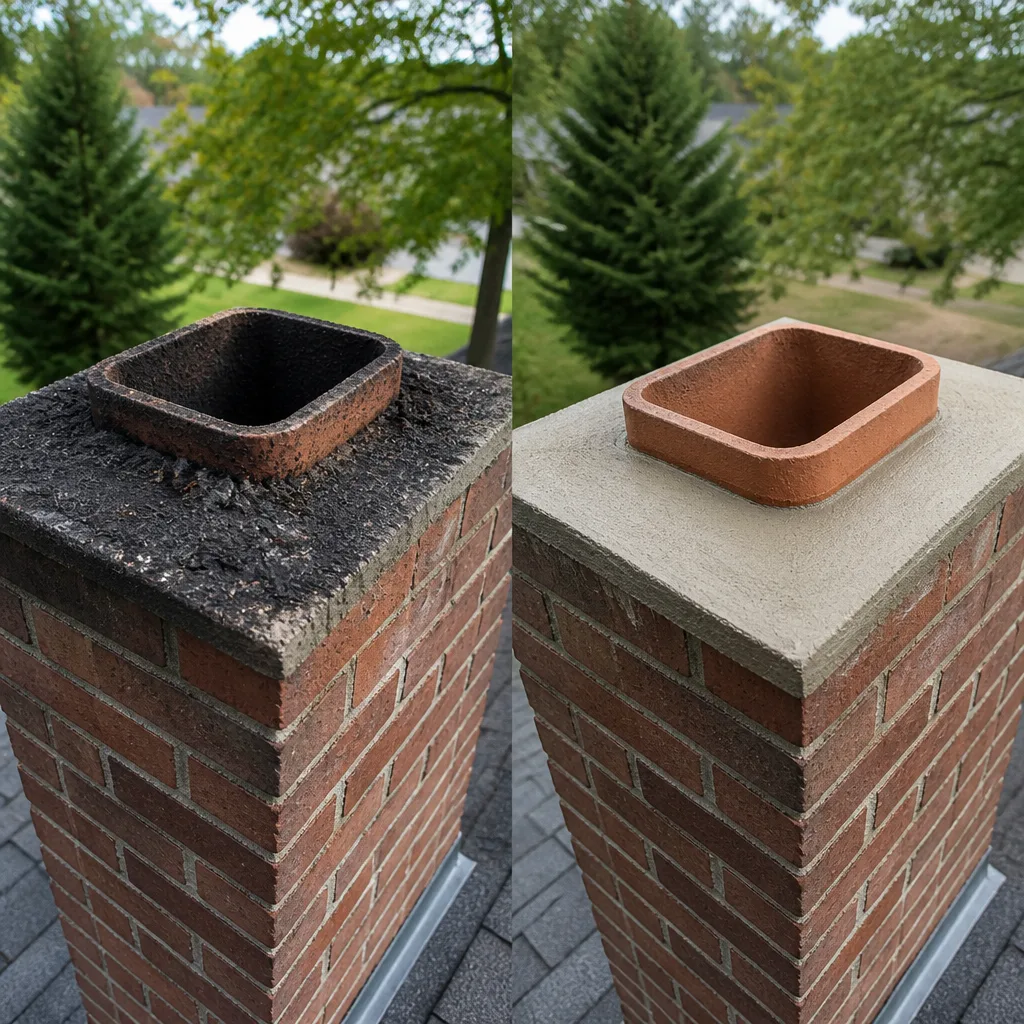
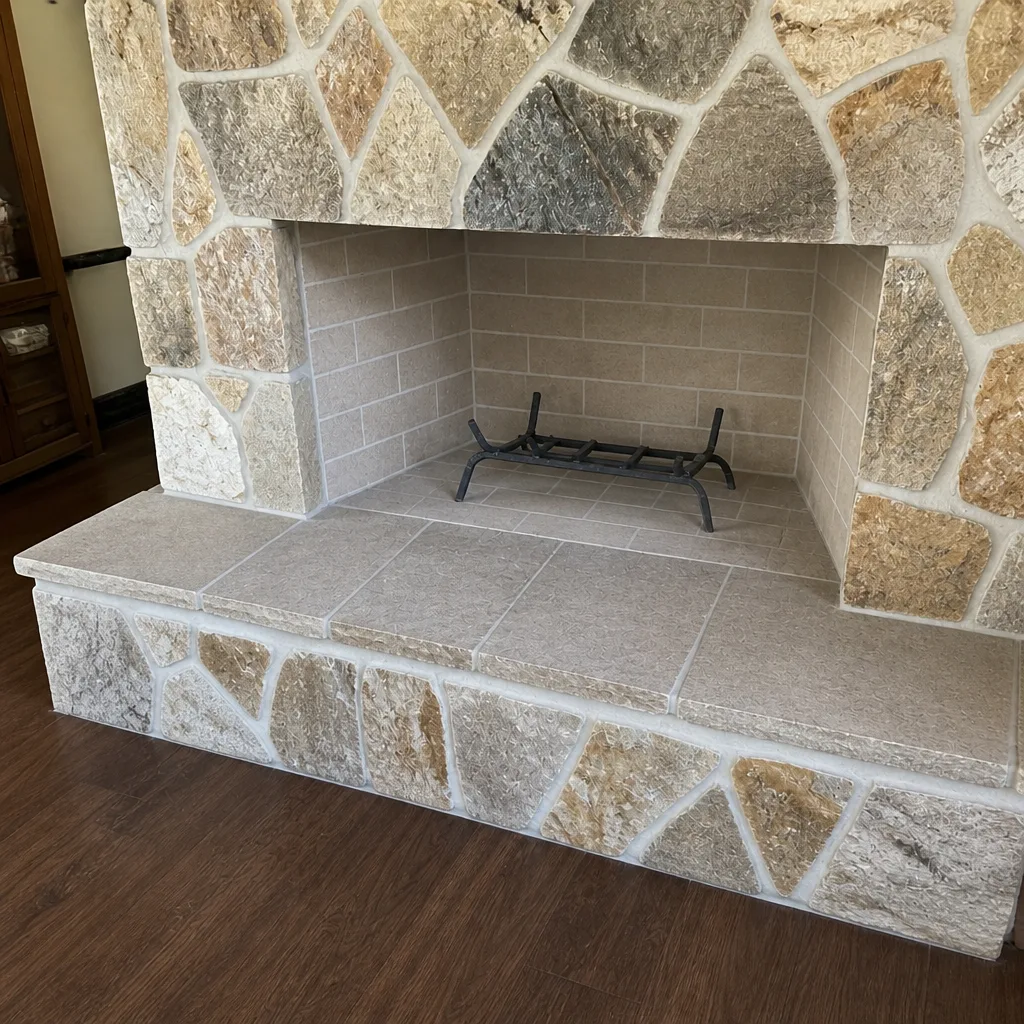
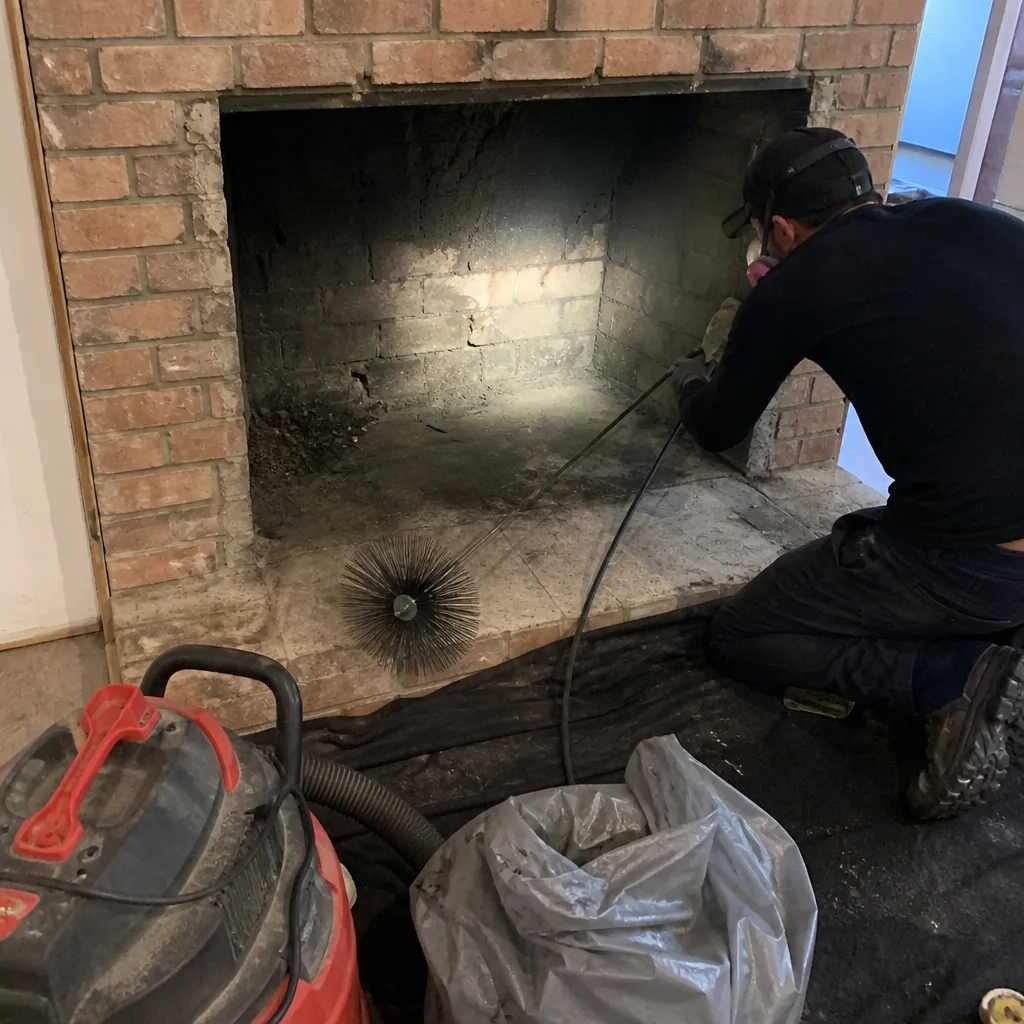
See the difference
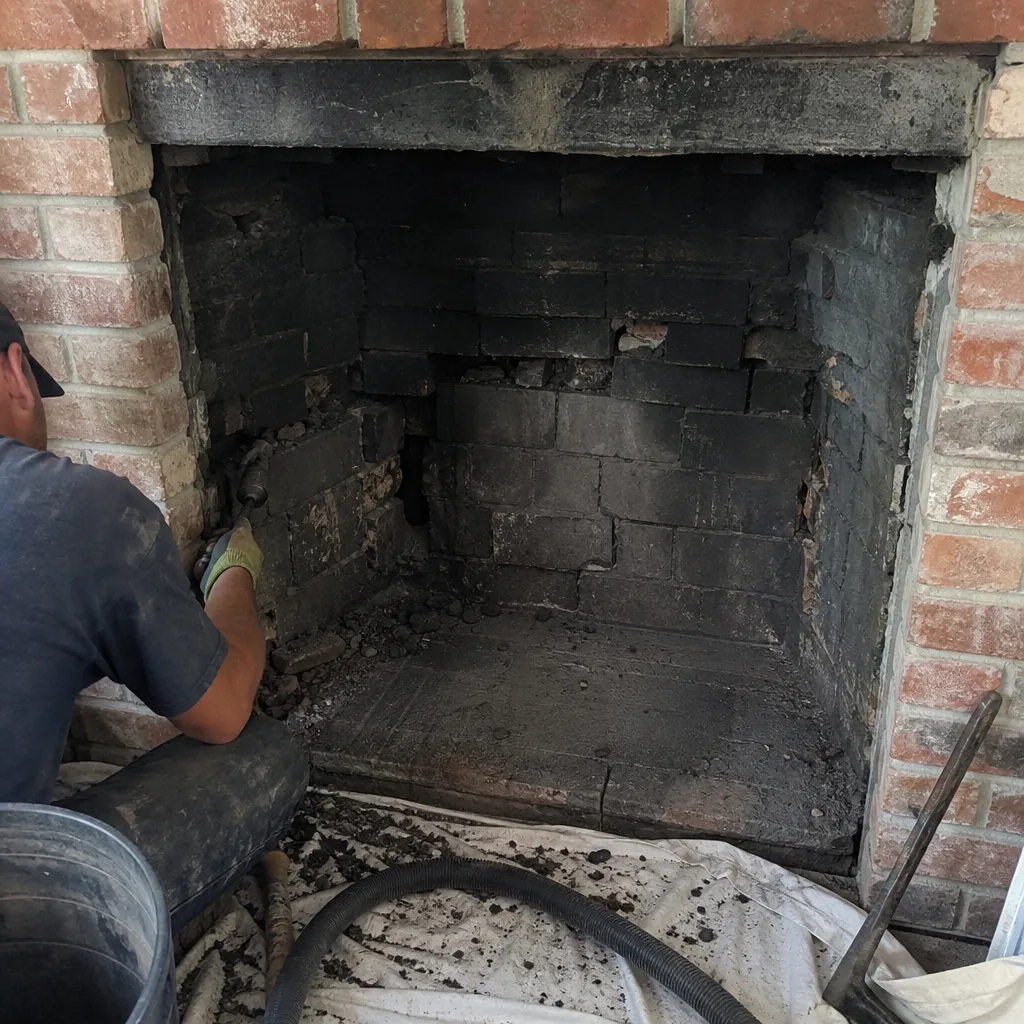 Before
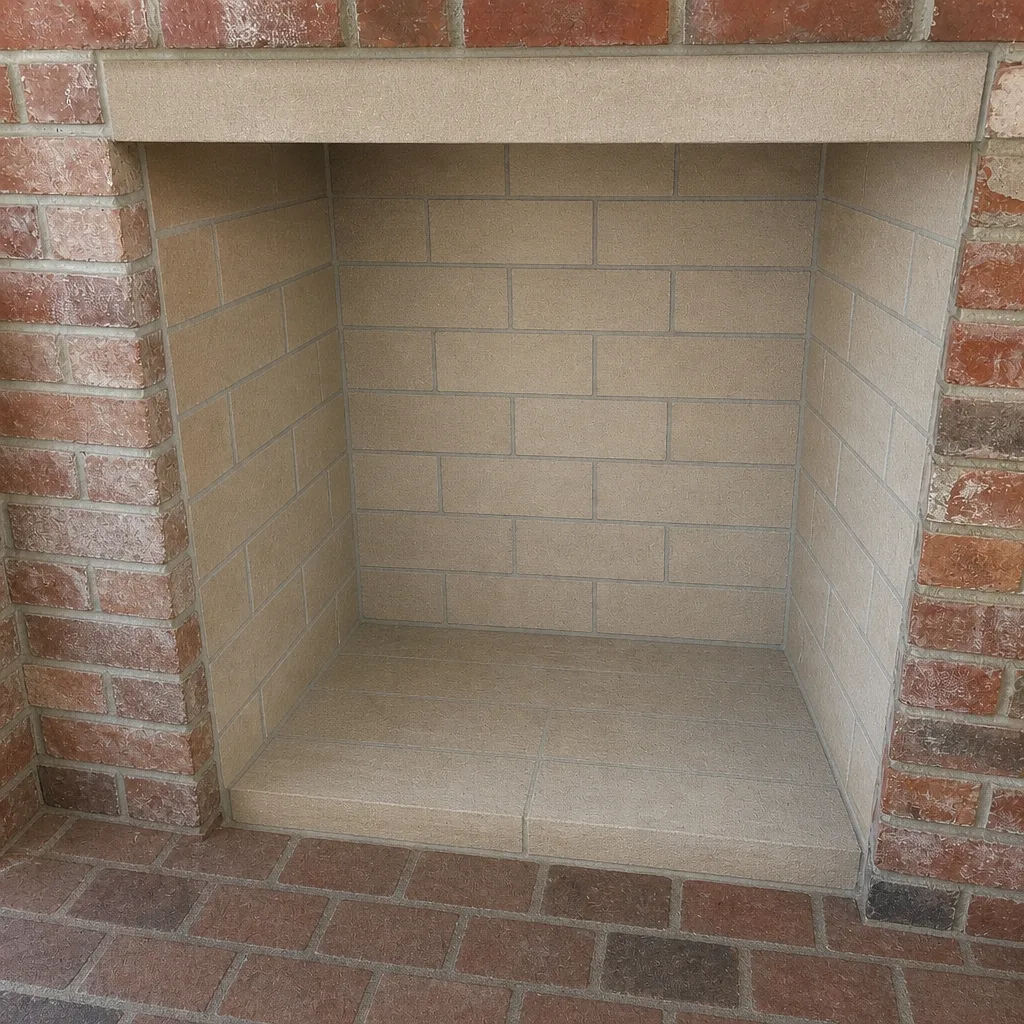 After
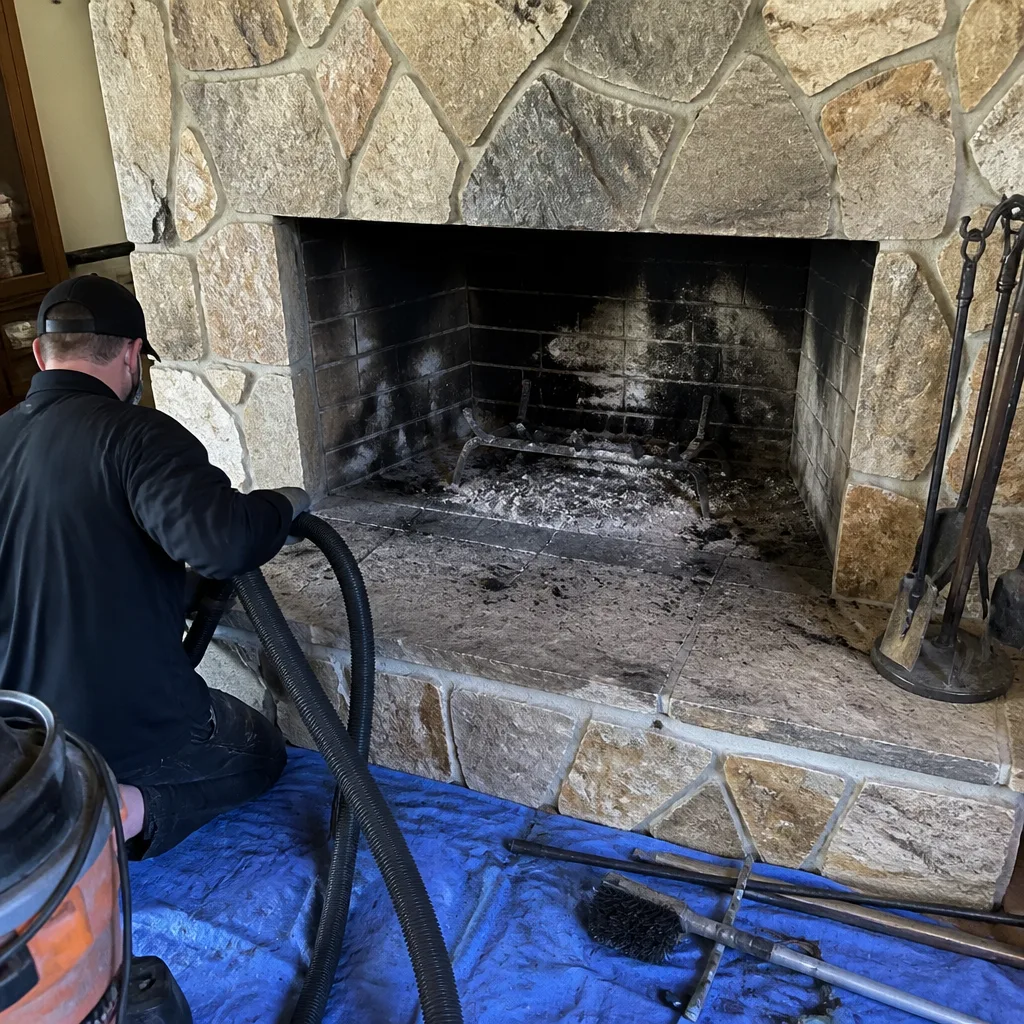 Before
 After
 Before
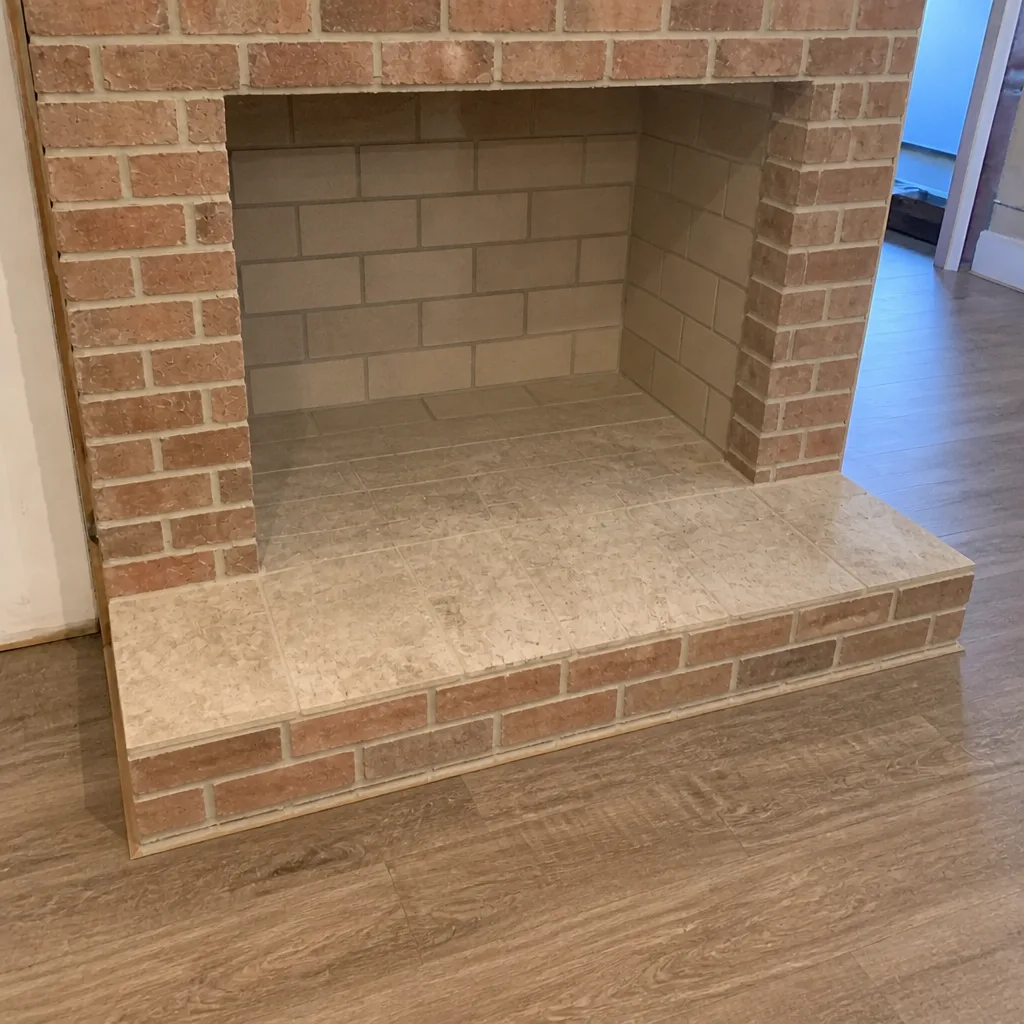 After
When to Call a Professional
If the chimney is older, unfamiliar, has never been inspected, or shows any unusual behavior during a fire, call before you clean. That covers most Spring Hill homes. Cracks in the firebox, smoke rolling into the room, a persistent creosote smell, or a chimney that hasn’t been checked in years all point to the same answer. Chimney Sweep Spring Hill offers free estimates in Spring Hill. Call (855) 360-8361. We answer 24/7. Fast dispatch from 7am to 7pm, Sunday through Friday. Our technicians have up to 13 years of experience, and our visits include the camera inspection and crown check that turn a sweep into a real diagnosis. When something needs repair, we handle it in-house using DuraFlex liner systems, HeatShield resurfacing, and components sourced through Olympia Chimney or Copperfield, so you’re not left coordinating a second contractor.
Frequently Asked Questions
Yes, technically, if the system has been professionally inspected recently, the liner is confirmed intact, and you’re only removing post-season surface soot. In our experience, that narrow case is the only one where DIY is a reasonable choice. If the chimney has never been inspected, or it’s been a couple of years, the first visit should be a professional one. Call (855) 360-8361 for a free estimate; estimates are free.
A chimney sweep in Spring Hill is priced per job by a written estimate, and the estimate is free. The final price is set before any work begins, so there’s no surprise at the end. The visit includes the camera inspection, the crown evaluation, and the draw test. Call (855) 360-8361 for an exact quote.
It misses everything a brush can’t see or reach: cracked liner tiles, a failing mortar crown, stage 2 or 3 creosote, flue draw problems, smoke chamber deposits, and animal nests. Those are the conditions that cause chimney fires and carbon monoxide problems. Any one of them warrants a professional inspection before the next fire.
Once a year is the usual baseline, and in a warm climate like ours that check matters more, not less, because longer idle periods give moisture and wildlife more time to work. If the fireplace is used heavily, or if a prior sweep found creosote buildup, plan on a visit sooner than that. Call (855) 360-8361 to book one.
Small problems like a hairline crown crack or a spalling tile have time to widen into real repairs, and creosote deposits cure harder over the summer. A chimney that would’ve needed a routine sweep can need a relining instead. That’s not a scare tactic, it’s how masonry fails in a humid climate. Call (855) 360-8361 for a look before the season starts.
Yes, estimates are free, and the price is set per job by the written estimate. We answer 24/7. Fast dispatch from 7am to 7pm, Sunday through Friday. If you’re not sure whether your chimney needs a sweep, a repair, or just a check, that’s exactly what the visit is for. Call (855) 360-8361 to book one.
The Bottom Line
DIY chimney brushing removes surface soot, and on a system that’s been recently inspected with a confirmed clean liner, it’s not unreasonable. Everywhere else, it’s the smaller half of the job. In Spring Hill, the climate makes the inspection half more important, not less, because a chimney that sits idle for months is where moisture damage, hardened creosote, and animal nests hide. The question isn’t whether you can push a brush up a flue. It’s whether you can see what’s behind the soot. If you can’t, that’s the answer.
Our technicians have up to 13 years of experience, and the visit includes a camera inspection and a crown check, so what the sweep reveals is shown to you rather than described. If we find a cracked liner, we can restore or reline it using HeatShield resurfacing or a DuraFlex liner system, and a dryer vent cleaning covers the other leading household fire hazard while we’re there. Everything is priced per job by the written estimate, and the estimate is free.
Call (855) 360-8361 for a free estimate. We answer 24/7. Fast dispatch from 7am to 7pm, Sunday through Friday. Whether the chimney is ready for the season or needs work before it’s safe to light, a written estimate will tell you where you stand.
Written by the team at Chimney Sweep Spring Hill.